Crypto Card for Restaurants in Indonesia
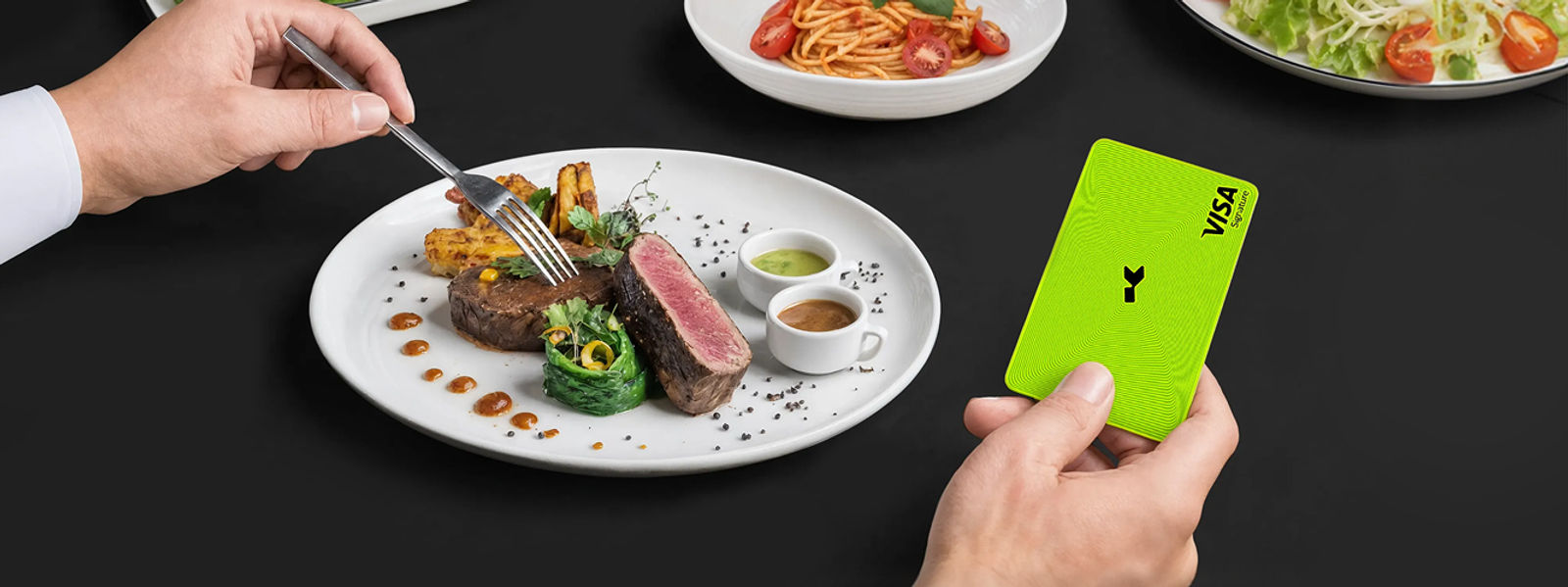
Eating out is one of the great pleasures of travelling through Indonesia. From a bowl of soto ayam at a roadside warung in Yogyakarta to a tasting menu at a cliffside restaurant in Uluwatu, the country's food scene spans every price point and cuisine style imaginable. But for travellers and residents who hold cryptocurrency, paying the bill has historically required a detour through a currency exchange, an ATM, or a bank transfer. A crypto card for restaurants in Indonesia removes that detour entirely — converting digital assets to the local settlement currency at the moment the card is presented, through the same Visa infrastructure that every restaurant and cafe in the country already uses. This guide explains how to choose and use the best crypto card for restaurant payments in Indonesia in 2026, with karta.io as the central example.
What is a crypto card for restaurants in Indonesia
What it means to pay in restaurants with a crypto card in Indonesia
Paying in restaurants with a crypto card in Indonesia means presenting a Visa or Mastercard debit card — funded by cryptocurrency rather than a traditional bank account — at the restaurant's POS terminal or handing it to a waiter for processing. The terminal sends a standard card authorisation request through the Visa network. The crypto card issuer (karta.io, in the case we focus on here) receives that request, converts the required IDR or USD amount from the cardholder's crypto balance at the current rate, and returns an approval code. The transaction completes in seconds. The restaurant receives its payment in standard fiat currency; the cardholder's crypto balance decreases by the converted equivalent.
From the restaurant's side, nothing about the transaction is unusual — it processes exactly like any other Visa debit payment. From the cardholder's side, the experience is identical to using a standard bank card: hand it over, wait a moment, done. The crypto mechanics happen invisibly in the background.
Typical places: cafes, restaurants, bars, food courts
A crypto card for dining in Indonesia works across the full spectrum of food-and-beverage venues. International restaurant chains in Jakarta's Central Business District and Bali's Seminyak strip use Verifone and Ingenico POS terminals that accept all Visa cards without distinction. Mid-range cafes — the specialty coffee shops that have proliferated across Canggu, Ubud, and Kemang — process card payments through the same networks. Hotel restaurants, food courts inside malls, rooftop bars, beachfront seafood grills, and even some higher-volume street food stalls that have adopted card payment systems all fall within the coverage of a Visa-network crypto card.
The main category where crypto cards are not the right tool is cash-only establishments: small warungs and market stalls that do not have a POS terminal. For these, cash remains necessary. But in any venue with a card reader — which in 2026 includes the large majority of tourist-facing and urban restaurants across Indonesia — a karta.io crypto card works without any special arrangement.
How karta.io enables crypto card for restaurants in Indonesia
karta.io converts a cryptocurrency balance into a spendable Visa card in two formats: virtual and physical. For restaurant payments specifically, the physical karta.io card is the primary instrument — it is handed to the waiter, inserted into a table-side terminal, or tapped on a contactless reader at the cashier. The card is funded by transferring supported cryptocurrencies to the karta.io wallet. At the moment the restaurant charges the card, karta.io converts the required amount from the crypto balance at the prevailing rate and settles through Visa. The user sees the transaction and updated balance instantly in the karta.io app.
Best crypto card for restaurants in Indonesia
What makes a crypto card the best for restaurants in Indonesia
The best crypto card for restaurants in Indonesia needs to satisfy a specific set of requirements shaped by the dining payment environment. Visa or Mastercard network support is the baseline: restaurant POS systems in Indonesia are universally configured for these two networks, and a card on any other network simply will not be accepted. Low transaction fees matter because dining is a high-frequency spending category — a card that charges 2–3% per meal makes eating out meaningfully more expensive over the course of a week or month.
Instant conversion is essential: when a waiter is standing at the table waiting for the payment to be approved, there is no time for a slow authorisation process. The conversion from crypto to fiat must complete within the standard two-to-three second card authorisation window. Real-time balance visibility through a mobile app is also important, so diners know before they order whether the card has sufficient funds to cover the bill — avoiding the awkward situation of a card being declined mid-restaurant.
Key features of a good crypto card for dining in Indonesia
Beyond the network and fee fundamentals, a good crypto card for dining in Indonesia should offer a mobile management interface that updates instantly after each transaction, showing the remaining balance and a complete transaction history. Multi-crypto top-up support — USDT, BTC, ETH, and other widely held assets — ensures users are not locked into a single asset for funding. Security features including card freeze, transaction alerts, and PIN management through the app are important for a card used in busy restaurant environments.
Quick onboarding without lengthy KYC delays is particularly valuable for tourists who arrive in Indonesia without a card ready and need one immediately. A physical card that can be ordered in advance and received before departure removes the risk of arriving card-less.
Why karta.io can be considered the best crypto card for restaurants in Indonesia
karta.io meets all of these criteria in a package designed from the outset for international users rather than domestic exchange customers. The Visa card works at Indonesian restaurant POS terminals without BIN-related compatibility issues. Fees are disclosed clearly and kept low for everyday transactions including dining. Top-ups via crypto transfer process within minutes. The karta.io app provides real-time balance and transaction visibility. Card security controls — freeze, PIN management, spending alerts — are accessible instantly from the app. And the onboarding process is fast, without the requirement to acquire and stake a native platform token that characterises several competing services.
Crypto debit card for restaurant payments Indonesia
How crypto debit card for restaurant payments Indonesia works
A crypto debit card for restaurant payments in Indonesia operates on a pre-funded model: the cardholder loads cryptocurrency into the card wallet before dining, and the equivalent fiat amount is debited at the time the restaurant charges the card. There is no credit line and no borrowing — the card spends only what has been loaded, providing a hard ceiling on dining expenditure that many travellers find useful for budget management.
karta.io uses instant conversion, meaning the crypto-to-fiat exchange happens at the precise moment the card is charged at the restaurant terminal — not when the wallet was topped up. For users holding stablecoins like USDT, the practical difference is minimal. For those holding BTC or ETH, instant conversion means the crypto balance is preserved until the last possible moment, maximising flexibility in asset management.
Advantages of using a crypto debit card for dining
The budget control advantage of a debit model is particularly relevant for dining in Indonesia's tourist zones, where it is easy to underestimate how quickly restaurant bills accumulate across a week of eating out. With a pre-funded card, the available balance is always visible in the app, providing a real-time spending ceiling. Once the balance approaches the limit, a top-up via crypto transfer adds funds within minutes — no trip to an ATM required.
Transparency of conversion rates is another advantage over cash dining payments. Dynamic currency conversion at restaurant POS terminals — where the terminal offers to charge in the cardholder's home currency rather than IDR — often applies an unfavourable rate that costs 3–5% more than the standard Visa rate. With karta.io, the conversion happens on karta.io's side at a disclosed spread, and the cardholder can simply decline DCC at the terminal to ensure the standard rate applies.
Why karta.io's crypto debit card is suitable for restaurant payments in Indonesia
karta.io's debit card structure is well suited to restaurant payment patterns in Indonesia. The instant top-up capability means that if a dining bill is larger than anticipated — a group dinner, an unexpected bottle of wine, a service charge that was not clearly listed — additional funds can be added to the card from a smartphone within minutes, before the waiter returns with the terminal. Multi-network top-up support gives users the flexibility to fund from whichever crypto wallet is most accessible at the time. And the Visa BIN used by karta.io is accepted at the restaurant payment processors used by both major chains and independent establishments across Indonesia.
Crypto card for dining in Indonesia
What is crypto card for dining in Indonesia
A crypto card for dining in Indonesia is a Visa debit card backed by cryptocurrency that covers the full range of food-and-beverage payment scenarios: breakfast at a beachside cafe, lunch at a food court, dinner at a fine-dining restaurant, drinks at a rooftop bar, and late-night snacks at a convenience store. It also extends to food delivery platforms — GoFood and ShopeeFood, which accept saved Visa card details for online orders — making it a single instrument for both dine-in and delivery spending.
The distinction between a crypto card for dining and a general-purpose crypto card is mostly practical: dining payments tend to be smaller and more frequent than, say, hotel or flight bookings, which means the card's low-fee structure and instant authorisation speed are especially important in this use case.
Typical use cases for dining: breakfast, lunch, dinner, snacks
A typical day of dining for a tourist or digital nomad in Indonesia generates three to five card transactions. Breakfast at a specialty coffee shop in Canggu — a flat white and an avocado toast — might run IDR 120,000–180,000. Lunch at a casual restaurant or mall food court, IDR 60,000–150,000. Dinner at a mid-range restaurant with drinks, IDR 200,000–600,000 per person. An afternoon snack from a convenience store or juice bar, IDR 20,000–50,000. Across a week, this adds up to IDR 4,000,000–10,000,000 in dining spending — a meaningful amount that rewards a card with low per-transaction fees.
For digital nomads who eat out for most meals rather than cooking, the dining category represents one of the largest single spending categories after accommodation. Having a reliable, low-fee crypto card for eating out in Indonesia means a significant portion of monthly living costs is covered efficiently from crypto holdings.
How karta.io supports dining in Indonesia
karta.io supports the full range of dining payment scenarios in Indonesia through its Visa card infrastructure. For dine-in payments, the physical card is presented at the terminal or handed to the server. For food delivery via GoFood or ShopeeFood, the virtual card number is saved in the app's payment settings for one-tap checkout. For cafe subscriptions or meal plan pre-payments, the card can be stored on file with the relevant service. All transactions draw from the same karta.io balance and appear in the same app transaction history, giving a unified view of dining spending regardless of the payment channel.
Crypto card for restaurants in Bali and Jakarta
Why Bali and Jakarta need strong crypto cards for restaurants
Bali and Jakarta represent opposite ends of the Indonesian dining spectrum and together account for the majority of tourist and expat restaurant spending in the country. Bali's restaurant scene — particularly in Seminyak, Canggu, Ubud, and Uluwatu — is among the most developed in Southeast Asia, with hundreds of internationally recognised restaurants, beach clubs, and fine-dining venues catering to a clientele that skews heavily toward international visitors, many of whom are crypto-familiar. A crypto card for restaurants in Bali needs to handle everything from a IDR 40,000 nasi goreng at a local warung to a IDR 2,000,000 tasting menu at a Michelin-recommended restaurant.
Jakarta's restaurant scene is driven more by business dining and urban professionals, with a dense concentration of international chains, Japanese and Korean restaurant groups, and high-end Indonesian cuisine establishments in the CBD, Senopati, and PIK areas. For the growing number of crypto-holding professionals and expatriates in Jakarta, a crypto card for restaurants in Jakarta needs to work reliably at upscale restaurant POS systems that process large corporate dining bills.
Typical use cases in Bali and Jakarta restaurants
In Bali, the typical crypto card for restaurants use cases include: morning coffee at a specialty cafe in Canggu, lunch at a beach club in Seminyak where the bill for two with drinks reaches IDR 800,000–1,500,000, dinner at a cliffside restaurant in Uluwatu with a set menu and cocktails, and late-night drinks at a bar in Legian. Each of these venues accepts Visa card payments and processes them through standard Verifone or Ingenico POS terminals.
In Jakarta, typical use cases include: business lunch at a Japanese or Korean restaurant in SCBD, dinner at an Indonesian fine-dining restaurant in Senopati, coffee and a working session at a specialty cafe in Kemang, and drinks at a rooftop bar in the hotel district. Transaction amounts tend to be higher in Jakarta's upscale dining venues, making the low-fee structure of karta.io more valuable per transaction.
How karta.io works in Indonesia's top food destinations
karta.io works identically in Bali and Jakarta's restaurant environments — which is to say, it works like any other Visa debit card. The physical card is presented at the terminal, the transaction is authorised through the Visa network, and the crypto balance is debited at the converted rate. In Bali's beach clubs, where tables sometimes run tabs across an entire afternoon session, the card can be stored on file and charged at settlement without the cardholder needing to be present at the terminal each time. In Jakarta's business restaurants, the card handles large group bills and service charges without any compatibility issues.
Crypto card for local restaurants in Indonesia
What is crypto card for local restaurants in Indonesia
Local restaurants in Indonesia — the warungs, rumah makan, and neighbourhood eateries that serve authentic Indonesian cuisine at accessible prices — represent the majority of dining establishments by number, though not necessarily by card-payment volume. Many small warungs operate on a cash-only basis, which means crypto cards are not applicable. However, a growing number of mid-size local restaurants and popular regional chains have adopted card payment infrastructure, particularly in cities like Bandung, Surabaya, Medan, and Makassar, as well as in the tourist areas of Yogyakarta and Lombok.
For these card-accepting local restaurants, a crypto card for local restaurants in Indonesia works exactly as it does in international chains: present the Visa card, complete the authorisation, done. The key requirement is that the establishment has a POS terminal connected to the Visa or Mastercard network — and for those that do, karta.io is fully compatible.
Advantages of using a crypto card in local establishments
Using a crypto card for eating out at local restaurants in Indonesia has a practical advantage over cash in card-accepting establishments: it eliminates the need to carry IDR banknotes, which requires ATM visits with their associated fees and the management of leftover cash. For digital nomads who eat primarily at local restaurants to keep costs down, the combination of low transaction fees and instant top-up capability makes a crypto card more cost-effective than repeated ATM withdrawals.
Spending records are another advantage: every transaction at a local restaurant is logged automatically in the karta.io app with the merchant name, amount, and timestamp. For nomads tracking monthly living costs in Indonesia, this automatic record is more reliable than manually logging cash expenses.
How karta.io simplifies payments in local Indonesian restaurants
karta.io simplifies payments in local Indonesian restaurants by providing a Visa card that works at any terminal the restaurant has, without special configuration or merchant registration. The card is presented in the same way as any other card — chip insertion for transactions above the contactless limit, tap for smaller amounts. The instant conversion ensures the IDR charge is covered by the crypto balance without any delay. And because the karta.io Visa BIN is in the mainstream range, it does not trigger the filtering that sometimes causes less common crypto card BINs to be declined at smaller local restaurant payment processors.
Crypto card for cafe and restaurant payments Indonesia
Typical use cases: cafes, restaurants, bars, food courts
The HoReCa landscape in Indonesia that a crypto card for cafe and restaurant payments needs to cover is broad. Specialty coffee cafes — a category that has exploded in Indonesia over the past five years, with local chains like Kopi Kenangan, Fore Coffee, and Janji Jiwa alongside international names like Starbucks and % Arabica — process high volumes of card payments at quick-service counters where transaction speed matters. Sit-down restaurants process payments at the table via portable terminals or at a fixed cashier station. Bars and nightlife venues often run tabs and settle at closing, requiring the card to handle a single larger charge rather than multiple small ones. Food courts in malls process rapid-fire transactions at individual stall counters.
A single physical karta.io card handles all of these scenarios without any differences in setup or behaviour. The card is presented or inserted the same way at every terminal type, and the authorisation flow is identical regardless of the venue category.
Advantages for cafe and restaurant payments
The advantages of using karta.io for cafe and restaurant payments in Indonesia compound across a month of regular dining. Low fees on each transaction translate to meaningful savings relative to cards that charge 2–3% foreign transaction fees on every purchase. Instant transaction notifications after each cafe or restaurant visit create an automatic spending log without any manual effort. The ability to top up from crypto in minutes means there is never a need to visit an ATM mid-trip because the card balance has run low.
For digital nomads who use cafes as their primary working environment — spending three to five hours per session and purchasing multiple rounds of drinks — the card provides a convenient way to run a modest tab at a single establishment without carrying cash.
How karta.io supports cafe and restaurant payments in Indonesia
karta.io's infrastructure is well matched to the cafe and restaurant payment environment in Indonesia. The Visa card is accepted at the quick-service terminals used by coffee chains, the table-side portables used by mid-range restaurants, and the fixed cashier stations used by food courts. The instant authorisation response means queue times at busy cafe counters are not extended by slow card processing. And the real-time balance update in the app after each transaction allows users to track their daily cafe and dining spending against a mental budget without any manual calculation.
How to pay at restaurants with crypto card in Indonesia
Step-by-step: how to pay at restaurants with crypto card in Indonesia
Setting up and using a crypto card for restaurant payments in Indonesia involves a straightforward sequence. First, create a karta.io account through the website or app and complete the onboarding process. Second, fund the karta.io wallet by transferring a supported cryptocurrency — USDT, BTC, ETH, or another supported asset — from an external wallet. The top-up is processed within minutes on most supported networks. Third, order the physical card through the karta.io app if in-person restaurant payments are needed; activate it on arrival and set a PIN through the app.
To pay at a restaurant: hand the physical card to the server or insert it into the POS terminal at the cashier. For transactions above the contactless limit, enter the PIN when prompted. The transaction is approved within a few seconds; the karta.io app sends an instant notification confirming the amount charged and the updated balance. For food delivery orders on GoFood or ShopeeFood, add the virtual karta.io card number to the saved payment methods and use it for one-tap checkout.
What to do if the payment is declined
A declined card at a restaurant is uncomfortable but manageable. The first step is to check the karta.io app immediately: if the balance is insufficient for the bill, a top-up via crypto transfer restores it within minutes. If the balance is adequate, the decline may be related to the terminal's processing configuration — trying chip insertion instead of contactless, or asking the server to process the payment as a manual entry, often resolves the issue.
If the card is consistently declined at a specific restaurant's terminal, this may indicate a local payment processor with unusual BIN filtering rules. In this case, paying through a major food delivery platform (GoFood) rather than directly at the restaurant — if the restaurant participates — is an alternative. For restaurants where card payment is essential, switching to a different merchant that uses a major bank's POS infrastructure (BCA, Mandiri, BNI terminal networks) generally resolves compatibility issues, as these processors accept mainstream Visa BINs without filtering.
How karta.io simplifies restaurant payments in Indonesia
karta.io reduces the friction points in restaurant payment scenarios through several design choices. The mainstream Visa BIN minimises the BIN-related declines that affect some crypto card alternatives at Indonesian restaurant terminals. The instant top-up capability means an unexpectedly large dinner bill does not require a trip to an ATM to cover the shortfall. Real-time transaction alerts confirm successful payments immediately, removing the uncertainty that sometimes accompanies card transactions in venues with intermittent connectivity. And the app's transaction history provides a clean record of every restaurant and cafe payment, useful for expense tracking without manual receipt management.
Virtual crypto card for restaurants in Indonesia
Virtual crypto card for restaurants in Indonesia: pros and cons
A virtual crypto card for restaurants in Indonesia — a card that exists only as a digital number, expiry, and CVV without a physical card — has a specific range of applications in the dining context. Its primary strength is instant availability: a virtual karta.io card can be issued and ready to use within minutes of account funding, with no physical delivery wait. Its primary limitation for restaurant use is that it cannot be handed to a waiter or inserted into a POS terminal — it works only in digital payment environments.
For dine-in restaurant payments, a virtual card is therefore not suitable as the sole payment instrument unless the restaurant supports QR code or in-app payment flows that accept saved card details. For food delivery and online restaurant orders, the virtual card is the ideal format — it is saved once in the delivery platform's payment settings and used for all subsequent orders without re-entering card details.
When to use a virtual crypto card for dining
The virtual karta.io card is the right instrument for food delivery orders via GoFood, GrabFood, or ShopeeFood — all of which support saved Visa card details for checkout. It is also appropriate for restaurant reservation platforms that charge a deposit at booking (a growing practice at popular Bali restaurants that receive many no-shows), and for meal kit or subscription food services that charge on a recurring basis. For any dining scenario where the payment is completed online rather than at a physical terminal, the virtual card handles it completely.
How karta.io implements virtual crypto card for restaurants
karta.io issues the virtual card instantly upon account creation and funding. The card number, expiry, and CVV are displayed in the app in a secure interface, with a one-tap copy function that makes entering the details into delivery platform payment forms fast and error-free. The virtual card can be added to GoFood, GrabFood, ShopeeFood, and any other food platform that accepts standard Visa card details. Spending on the virtual card draws from the same karta.io balance as the physical card, so there is no need to manage separate wallets for online and offline dining payments.
Physical crypto card for restaurants in Indonesia
Physical crypto card for restaurants in Indonesia: key benefits
The physical crypto card for restaurants in Indonesia is the format that covers the majority of dining payment scenarios: dine-in at any establishment with a POS terminal, bar tabs settled at closing, hotel restaurant charges added to a room account and then paid by card at checkout, and split-bill situations where each person pays their share by card at the table. None of these scenarios are possible with a virtual card alone — they require a physical card that can be inserted, tapped, or swiped.
The physical karta.io card is a standard Visa debit card in form factor and function. It is accepted at restaurant POS terminals across Indonesia without any merchant-side configuration. It supports chip-and-PIN for standard transactions and contactless for smaller amounts where the terminal's contactless limit is not exceeded.
Typical situations where a physical card is better
Physical card situations in Indonesian restaurants include: a sit-down dinner where the waiter brings a portable terminal to the table, a beach club session where the tab is settled by card at the end of the afternoon, a hotel breakfast included in the room rate but charged additionally for extras like fresh juice or eggs benedict, a group dining situation where the bill is split and each person pays their own share by card, and a restaurant that requires a physical card swipe for age verification when ordering alcohol.
For tourists who plan to dine out regularly — which in practice means daily for most visitors to Bali or Jakarta — the physical card is the essential instrument. It covers all of these scenarios without requiring any workaround or advance arrangement with the restaurant.
How karta.io balances virtual and physical options
karta.io provides both options from a single account and a single balance. Users who order food delivery frequently can rely on the virtual card for those transactions while using the physical card for all dine-in payments. Both cards draw from the same crypto-funded balance, so there is no need to allocate funds between them or maintain separate wallets. The physical card can be ordered during onboarding — before the trip begins — so it arrives ready for use from day one. The virtual card is available immediately upon account funding, covering food delivery and online restaurant reservations from the moment the account is active.
Crypto card Indonesia review and comparison
General crypto card for restaurants in Indonesia review in 2026
The crypto card options available to restaurant-goers in Indonesia in 2026 fall into the same broad categories as for other spending use cases. Exchange-native cards — primarily Binance Card and Crypto.com Card — are the most widely recognised names in the crypto card market, but they impose native-token staking requirements (BNB for Binance, CRO for Crypto.com) to access competitive fee tiers, and their BIN acceptance at Indonesian restaurant payment processors is inconsistent, particularly at independent establishments and smaller regional chains that use local bank POS infrastructure.
Fintech crypto cards like Wirex and Revolut's crypto offering are designed for European market conditions and frequently encounter acceptance issues at Southeast Asian restaurant terminals. The BIN ranges and issuer configurations used by these services are not always recognised by the Indonesian payment processors that restaurants rely on, leading to unexplained declines at the point of payment.
Standalone crypto debit card services like karta.io are designed specifically for international spending in markets including Indonesia, with Visa BIN configurations and processing relationships calibrated for the Southeast Asian payment environment.
karta.io vs other crypto cards for restaurant payments in Indonesia
On the metrics most relevant to restaurant payments in Indonesia — onboarding speed, fee structure, acceptance at Indonesian restaurant terminals, and physical card availability — karta.io compares favourably to its main alternatives. Binance Card requires BNB staking to reduce fees to levels competitive with karta.io's disclosed flat rate, adding a layer of financial commitment that many users who simply want to pay for dinner would prefer to avoid. Crypto.com Card's CRO staking requirement creates the same friction.
Wirex's European regulatory focus means its cards regularly fail at Indonesian restaurant terminals that use local bank payment processors with tighter BIN filtering. BitPay's geographic restriction to North America makes it effectively unusable for restaurant paym