Crypto Card for In-Store Payments in Indonesia
Indonesia's retail landscape has expanded rapidly over the past decade. Sprawling malls in Jakarta and Surabaya, supermarket chains spread across every major city, and thousands of independent cafes, restaurants, and pharmacies all rely on card-accepting POS terminals. For travellers and residents who hold cryptocurrency, a physical crypto card for in-store payments in Indonesia bridges the gap between digital assets and the everyday spending that makes life in the country functional. This guide covers how these cards work, what to look for, and why karta.io has become one of the most practical options for offline retail spending in Indonesia in 2026.
What is a crypto card for in-store payments Indonesia
What it means to pay in stores with a crypto card in Indonesia
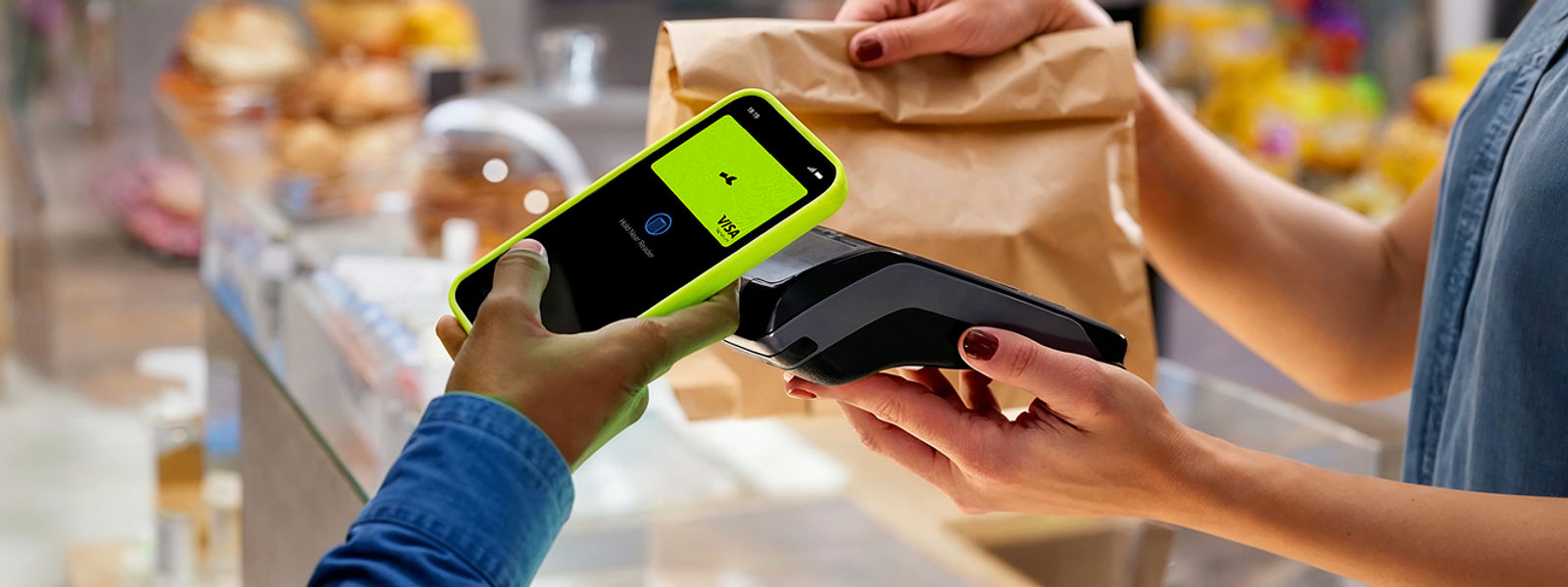
Paying in stores with a crypto card in Indonesia means using a Visa or Mastercard debit card that is funded by cryptocurrency rather than a traditional bank account. When the card is presented at a POS terminal — whether by chip insertion, contactless tap, or magnetic stripe swipe — the terminal processes it as a standard card transaction. The crypto card issuer handles the conversion from crypto to the settlement currency (IDR, USD, or EUR depending on how the merchant processes the transaction) at the moment of payment.
From the merchant's perspective, the transaction is indistinguishable from any other card payment. From the cardholder's perspective, the crypto balance decreases by the converted equivalent of the purchase amount. No manual conversion step is required, no crypto wallet app needs to be opened at the checkout counter, and no explanation to the cashier is necessary. The card works like any debit card — because, at the network level, it is one.
Typical places where you can pay with a crypto card
A crypto debit card for in-store payments in Indonesia covers the full range of retail and service environments. Supermarkets like Indomaret, Alfamart, Transmart, and Ranch Market all use standard Visa-accepting POS terminals. Shopping malls — from Grand Indonesia and Plaza Indonesia in Jakarta to Discovery Shopping Mall in Bali — house hundreds of individual retailers, food courts, and entertainment venues that process card payments. Cafes, restaurants, and warungs that have moved to digital payment systems accept chip-and-PIN or contactless card payments. Pharmacies, convenience stores, petrol stations, and transport services operating through card-accepting channels are also part of the everyday spending picture. In short, any physical location in Indonesia that accepts Visa or Mastercard accepts a karta.io crypto card.
How karta.io enables crypto card for in-store payments Indonesia
karta.io converts a crypto balance into a spendable Visa debit card in two forms: virtual and physical. For in-store payments specifically, the physical karta.io card is the primary instrument — it can be inserted into chip readers, tapped on contactless terminals, or swiped at older POS systems. The card is funded by transferring supported cryptocurrencies (USDT, BTC, ETH, and others) to the karta.io wallet, where the balance is held until a purchase is made. At the moment of payment, the required fiat amount is converted from the crypto balance and settled through the Visa network. The user manages everything — balance top-ups, transaction history, card freeze — through the karta.io app.
Best crypto card for in-store shopping in Indonesia
What makes a crypto card the best for in-store shopping Indonesia
The best crypto card for in-store shopping in Indonesia needs to satisfy several criteria simultaneously. Visa or Mastercard network support is the foundation: without it, the card simply will not work at Indonesian retail POS terminals, which are universally configured for these two networks. Low transaction fees matter for everyday spending — a card that charges 2–3% per purchase makes regular supermarket and cafe visits meaningfully more expensive over the course of a month-long stay.
Instant or near-instant conversion is critical for in-store use: there should be no delay between tapping the card and the transaction being approved, and the conversion rate should be applied at the time of the transaction rather than calculated hours later. The ability to top up quickly via crypto transfer — ideally within minutes — means users can reload the card between shopping trips without a long wait. Balance visibility through a mobile app rounds out the requirements, giving users real-time awareness of how much is available to spend before they reach the checkout.
Key features of a good crypto card for physical stores Indonesia
Beyond network compatibility and fees, a good crypto card for physical stores in Indonesia should offer a mobile management interface that displays the current balance, recent transactions, and pending authorisations in real time. The card should support multiple top-up cryptocurrencies so users are not locked into a single asset. Security features — card freezing, spending limit controls, instant transaction alerts — are important for a card used in busy retail environments where loss or theft is a realistic risk.
Physical card durability and delivery timelines matter too: a card that takes three to four weeks to arrive is impractical for a tourist planning a two-week visit. The absence of mandatory native-token staking or complex KYC processes that delay card activation is also a meaningful feature for users who want to get started quickly.
Why karta.io can be considered the best crypto card for shopping in stores in Indonesia
karta.io meets the criteria for the best crypto card for shopping in stores in Indonesia across every dimension. The Visa card works at Indonesian retail POS terminals without compatibility issues. Fees are disclosed clearly and remain low for everyday transactions. Top-ups process within minutes on supported networks. The karta.io app provides real-time balance and transaction visibility. Card freezing and security controls are available instantly from the app. And the onboarding process is faster than most competing services, without requiring users to acquire and stake a platform token to access core functionality.
Crypto card for offline payments Indonesia
How crypto card for offline payments Indonesia works
A crypto card for offline payments in Indonesia operates entirely within the existing Visa card infrastructure. When the physical karta.io card is presented at a POS terminal, the terminal sends an authorisation request through the standard Visa network. karta.io's backend receives this request, checks the available crypto balance, converts the required amount to fiat at the current rate, and returns an approval code to the terminal — all within the standard card authorisation window of a few seconds. The cashier sees an approved transaction; the karta.io user sees a debit notification in the app.
Contactless payments work on the same principle: the card communicates with the terminal via NFC, the authorisation flow runs through Visa's network, and the transaction completes in the same way as a chip payment. For transactions below the contactless limit set by the terminal (typically IDR 1,000,000 or the equivalent in foreign currency), no PIN entry is required.
Common use cases in offline environments
The practical use cases for a crypto card for offline payments in Indonesia span the full range of daily life. Supermarket runs at Indomaret or Transmart for groceries and household supplies. Lunch at a cafe or restaurant in a mall food court. A prescription at a Guardian or Century pharmacy. Petrol at a card-accepting Shell or BP station. Transport — GrabCar or BlueBird taxi payments at drivers who accept card payments. A movie ticket at CGV or XXI cinemas inside a mall. A clothing purchase at Zara, H&M, or local Indonesian fashion brands in a department store. Each of these transactions works with the physical karta.io card in exactly the same way as it would with a standard bank debit card.
How karta.io supports secure offline payments in Indonesia
Security for offline payments is handled through several layers in the karta.io system. Each physical card has a unique card number, expiry, and CVV. The PIN is set by the user through the app and is never visible to karta.io staff. Transaction notifications are pushed to the app in real time, so any unauthorised charge is flagged immediately. If the card is lost or stolen, it can be frozen instantly from the app, preventing any further charges. These controls give users the confidence to use the card in busy retail environments — tourist markets, crowded malls, transit hubs — without worrying that a compromised card will result in uncontrolled losses.
Crypto card for physical stores Indonesia
What is a crypto card for physical stores Indonesia
A crypto card for physical stores in Indonesia is a card that works in brick-and-mortar retail locations — not just for online shopping. This distinction is important because many crypto payment solutions are optimised for e-commerce: they issue virtual card numbers that work on websites but cannot be presented at a physical checkout counter. For travellers and residents who need to pay in actual stores, a physical card is the essential format.
The physical karta.io card fills this gap directly. It is a tangible Visa debit card that is inserted into chip readers, tapped on contactless terminals, and accepted at any point of sale in Indonesia that processes Visa transactions — which includes the overwhelming majority of formal retail and food-service establishments in the country's cities and major tourism destinations.
Advantages of using a crypto card in brick-and-mortar stores
Using a crypto card for retail shopping in Indonesia has several advantages over managing cash. Budget control is more precise: the card spends from a pre-funded balance, so there is a hard limit on how much can be spent in a given period without a deliberate top-up. Transaction records are stored automatically in the karta.io app, creating a complete spending log without the need to keep paper receipts. For digital nomads and long-stay tourists who track expenses for accounting or tax purposes, this automatic record-keeping is a meaningful time-saver.
Exchange rate transparency is another advantage over cash. Currency exchange desks at airports and tourist areas in Indonesia often offer rates 3–6% below the inter-bank rate. karta.io applies a disclosed spread on the inter-bank rate that is typically smaller than what a physical money changer offers, meaning more of the crypto value ends up as purchasing power.
How karta.io simplifies payments in Indonesian physical stores
karta.io simplifies in-store payments in Indonesia by removing every step that is not the payment itself. There is no need to visit a bank, open a local Indonesian account, or convert crypto to IDR via an exchange before the shopping trip. Fund the card with crypto, carry the physical card, and pay at the POS terminal. The app handles the conversion, the network handles the settlement, and the user handles the shopping. In cities like Jakarta, Surabaya, Bali, and Yogyakarta — where the retail infrastructure reliably accepts Visa — this covers the full scope of everyday spending.
Crypto card for supermarkets in Indonesia
Why you need a crypto card for supermarkets in Indonesia
Supermarkets are the highest-frequency spending environment for most travellers and residents in Indonesia. Whether stocking up on water, snacks, and sunscreen at an Indomaret near the villa in Canggu, or doing a full weekly grocery shop at Transmart or Ranch Market in Jakarta, the need to pay quickly and without friction is constant. A crypto card for supermarkets in Indonesia eliminates the need to carry IDR cash — which requires a trip to an ATM, exposes the holder to ATM fees, and creates the management problem of having leftover local currency at the end of the trip.
For tourists staying a week or two, the supermarket is often the first place a new payment card gets used. A smooth first experience — tap, approve, done — sets the tone for confidence in the card across all subsequent use cases.
Typical supermarket expenses for tourists and digital nomads
A typical supermarket basket in Indonesia for a tourist or digital nomad includes bottled water and beverages, fresh fruit, packaged snacks, basic toiletries and personal care products, prepared meals from the deli counter, and household cleaning supplies for apartment stays. For digital nomads on longer stays, the weekly supermarket bill can run IDR 500,000 to IDR 1,500,000 — equivalent to roughly $30–$100 — making it a meaningful category of regular spending that rewards a low-fee payment method.
How karta.io works in Indonesia's supermarkets
karta.io works in Indonesian supermarkets exactly as it works in any other Visa-accepting store. At the checkout counter, present the physical karta.io card to the cashier or tap it on the contactless reader. The POS terminal processes the transaction through the Visa network, karta.io converts the IDR charge to the equivalent crypto balance reduction, and the transaction is complete in seconds. The karta.io app pushes a notification with the transaction amount and updated balance, so the user knows immediately what was spent and what remains available.
For supermarkets that offer loyalty programmes tied to card payment — such as certain chains that award points per card transaction — the karta.io Visa card qualifies for these programmes in the same way as any other Visa debit card, as the loyalty system does not distinguish between card types.
Crypto card for malls in Indonesia
Why malls are perfect for crypto card use in Indonesia
Indonesian malls are among the most comprehensive retail environments in Southeast Asia. A single complex like Grand Indonesia in Jakarta or Beachwalk in Bali contains fashion retailers, electronics stores, supermarkets, food courts, sit-down restaurants, cinemas, pharmacies, bookstores, and service providers — all under one roof, all accepting card payments. For a traveller or nomad who wants to consolidate an entire day's spending into a single card, a mall visit is an ideal test case for a crypto card for malls in Indonesia.
The diversity of merchants within a mall also means a single card needs to work across different POS terminal brands, different payment processor configurations, and different transaction sizes — from a IDR 30,000 coffee to a IDR 3,000,000 electronics purchase. A Visa card with a mainstream BIN, like karta.io, handles this variety without issues.
Typical use cases in malls
A day in an Indonesian mall generates a range of spending across multiple merchants. Breakfast or a mid-morning coffee at a cafe chain like Starbucks or Kopi Kenangan. Lunch at the food court. A clothing purchase at a local or international fashion brand. A cinema ticket for an afternoon screening at CGV or Cinepolis. A stop at the pharmacy for sunscreen or medication. Possibly a grocery run at the supermarket anchor store before heading home. Each of these transactions is a separate card payment at a different terminal — and each one works seamlessly with the physical karta.io card, with no special preparation needed between purchases.
How karta.io helps you pay in Indonesian malls
karta.io's physical card handles the variety of mall payment scenarios without configuration changes or merchant-specific setup. The card is presented the same way at every terminal — chip insertion for larger transactions, contactless tap for smaller ones — and the Visa network routes each transaction correctly regardless of the merchant type. Between purchases, the karta.io app updates the balance in real time, so the user always knows how much remains available before the next transaction.
For mall spending specifically, the instant top-up capability is a useful safety net: if a purchase depletes the balance more than expected, a crypto transfer to the karta.io wallet replenishes it within minutes, allowing the shopping session to continue without a trip to an ATM.
Crypto card for everyday spending in Indonesia
How to use crypto card for everyday spending in Indonesia
Using a crypto card for everyday spending in Indonesia means relying on it as the primary payment instrument across the full spectrum of daily expenses: groceries, meals, transport, entertainment, personal care, and incidental purchases. The card replaces the need for a local bank account, a supply of IDR cash, or a foreign-currency bank card that may incur high international transaction fees.
The daily routine for a crypto card user in Indonesia typically looks like this: check the karta.io balance each morning through the app, top up if the anticipated day's spending warrants it, and use the physical card throughout the day at every point-of-sale encounter. Transaction notifications arrive in real time, creating a running total of the day's spending without the need to manually log receipts.
Benefits of using a crypto card for daily expenses
The benefits of using a crypto card for everyday spending in Indonesia compound over time. Fee savings relative to ATM cash withdrawals — which typically carry IDR 50,000–75,000 per transaction in foreign card fees — add up significantly over a month-long stay. Exchange rate transparency means the user knows the exact cost of each purchase in their home currency equivalent, rather than estimating based on a cash exchange rate negotiated at a money changer.
Spending records maintained automatically in the karta.io app reduce the administrative burden of expense tracking. And the ability to top up from anywhere using crypto — without visiting a bank branch or currency exchange — gives the card a flexibility that no locally-issued card can match for international visitors.
Why karta.io is ideal for everyday spending in Indonesia
karta.io handles the full range of everyday spending in Indonesia from a single balance and a single physical card. Whether the day involves a supermarket run, a cafe lunch, a mall shopping trip, and a pharmacy stop, or a combination of transport payments and restaurant dinners, the karta.io card works at every Visa-accepting terminal without any reconfiguration. Top-ups are available on demand through the crypto transfer process, and the app provides the balance visibility needed to manage daily spending confidently.
For digital nomads who rotate through multiple Indonesian cities — and for tourists who move between Bali, Lombok, Java, and other islands — the card works identically everywhere in the country, without any region-specific setup or local bank relationship required.
Crypto card for point of sale payments Indonesia
What is crypto card for point of sale payments Indonesia
A crypto card for point of sale payments in Indonesia is a physical card that processes transactions at POS terminals — the card readers found at checkout counters in supermarkets, cafes, pharmacies, malls, restaurants, and any other establishment that accepts card payments. POS payments are the standard form of in-person card spending, covering the full range from a IDR 15,000 snack at a convenience store to a IDR 10,000,000 electronics purchase at a department store.
POS payment with a crypto card works through the same terminal hardware and the same Visa processing infrastructure used by all other debit and credit cards. The crypto conversion is handled entirely by karta.io in the background — the POS terminal, the merchant's bank, and the Visa network all interact with the karta.io card as a standard Visa debit instrument.
Types of POS payments supported by crypto cards
Modern POS terminals in Indonesia support several payment input methods. Chip-and-PIN is the standard for most transactions above the contactless limit: the card is inserted into the terminal, and the user enters a four-digit PIN to authorise the charge. Contactless payment — card tap on an NFC reader — is increasingly common and is supported at most major chain retailers and restaurant POS systems. Magnetic stripe swipe remains available at older terminals in smaller establishments, though it is less common as chip readers have become standard.
The physical karta.io card supports chip-and-PIN and magnetic stripe. For higher-value transactions or at terminals that require PIN entry regardless of amount, the PIN set through the karta.io app is used for authorisation.
How karta.io works with POS terminals in Indonesia
karta.io's physical card integrates with Indonesian POS terminals through the standard Visa card acceptance flow. When the card is inserted or tapped, the terminal sends an authorisation request to the Visa network, which routes it to karta.io. karta.io checks the available balance, applies the conversion at the current rate, and returns an approval response to the terminal — all within the standard two-to-three second authorisation window. The terminal prints or displays the approval confirmation, and the transaction is complete.
This process is reliable across the range of POS terminal brands and configurations found in Indonesia, from the Verifone and Ingenico terminals common in large retail chains to the smaller units used in independent cafes and warungs. The karta.io Visa BIN does not trigger the filtering rules that cause some crypto card transactions to be declined at Indonesian POS systems.
How to pay in stores with crypto card in Indonesia
Step-by-step: how to pay in stores with a crypto card in Indonesia
The process of setting up and using a crypto card for in-store payments in Indonesia involves four stages. First, create a karta.io account and complete the onboarding process — this is typically faster than competing services, without extended KYC delays. Second, order the physical card through the karta.io app and fund the wallet by transferring a supported cryptocurrency from an external wallet. The physical card ships internationally and arrives within the delivery window specified at order time.
Third, once the card arrives, activate it through the karta.io app and set a PIN for POS transactions. Fourth, use the card at any Visa-accepting store in Indonesia: insert the chip for standard transactions, tap for contactless where available. Monitor the balance through the app and top up via crypto transfer as needed. The whole setup process can be completed before departure, so the card is ready to use from the first day in Indonesia.
What to do if the terminal does not accept the card
Occasional terminal declines are a reality for any international card in Indonesia, including standard bank-issued debit cards. If a karta.io card is declined at a POS terminal, the recommended steps are: verify that the card has sufficient balance in the karta.io app, try a different input method (chip instead of tap, or vice versa), and if the decline persists, use a major OTA or a different merchant location.
In practice, declines at Indonesian retail terminals are rare for karta.io due to its mainstream Visa BIN. If a particular merchant's terminal consistently declines the card — which may indicate a local payment processor with unusual filtering rules — the alternative is to withdraw cash from an ATM using the karta.io card (where supported) or to use the karta.io virtual card for an online equivalent purchase.
How karta.io simplifies the process of paying in Indonesian stores
karta.io reduces the friction in every step of the in-store payment process. Onboarding is faster than exchange-native competitors that require native token acquisition and lengthy identity verification. Top-ups are processed within minutes rather than the hours or days that bank wire transfers require. The Visa card is accepted at Indonesian retail terminals without the BIN-related declines that affect some crypto card alternatives. And the app provides the real-time balance visibility and instant transaction alerts that give users confidence throughout a day of retail spending.
Crypto card Indonesia review and comparison
General crypto card for in-store payments Indonesia review in 2026
The crypto card options available for in-store payments in Indonesia in 2026 fall into the same three categories as for other use cases. Exchange-native cards — Binance Card, Crypto.com Card — are widely known but impose native-token staking requirements and inconsistent acceptance at Indonesian retail POS terminals. Traditional fintech crypto cards like Wirex are designed primarily for European markets and can encounter BIN-related acceptance issues at Indonesian supermarkets and mall terminals. Standalone crypto debit card services like karta.io are specifically designed for international in-store use and perform more consistently in the Indonesian retail environment.
karta.io vs other crypto cards for in-store payments in Indonesia
Comparing karta.io to its main alternatives on the metrics most relevant to Indonesian in-store payments: Binance Card requires BNB staking to reduce fees to competitive levels, and its acceptance at smaller Indonesian retailers is inconsistent due to BIN filtering at local payment processors. Crypto.com Card requires CRO staking for any meaningful fee benefit, and the card's European regulatory focus means it is not optimised for Southeast Asian retail environments. Wirex faces similar geographic limitations, with its product designed primarily for UK and European card acceptance infrastructure.
karta.io, by contrast, does not require token staking, is designed for international users in markets including Southeast Asia, and uses a Visa BIN that is accepted at Indonesian retail terminals without the filtering issues that affect some alternatives.
Why karta.io is one of the best options for in-store payments in Indonesia
karta.io's combination of physical card availability, Visa network compatibility, low and transparent fees, instant crypto top-up, and fast onboarding makes it one of the most functional crypto cards for in-store spending in Indonesia. It works at supermarkets, malls, cafes, pharmacies, and any other Visa-accepting retail location across the country — without token staking, without geographic restrictions, and without the extended KYC delays that slow down competing services.
For tourists exploring Bali's shops and restaurants, digital nomads managing monthly expenses across Indonesian cities, and international residents who prefer to spend from crypto holdings rather than a local bank account, karta.io delivers a reliable, low-friction in-store payment solution that covers the full range of everyday retail spending in Indonesia — with a single card, a single balance, and a straightforward top-up process.